Seminars on Future of Cross-Border Insolvency and Dispute Resolution and Transnational Practice of Law in ASEAN
- Home
- Announcements
- Seminars on Future of Cross-Border Insolvency and Dispute Resolution and Transnational Practice of Law in ASEAN
Posted on : 24 November 2025
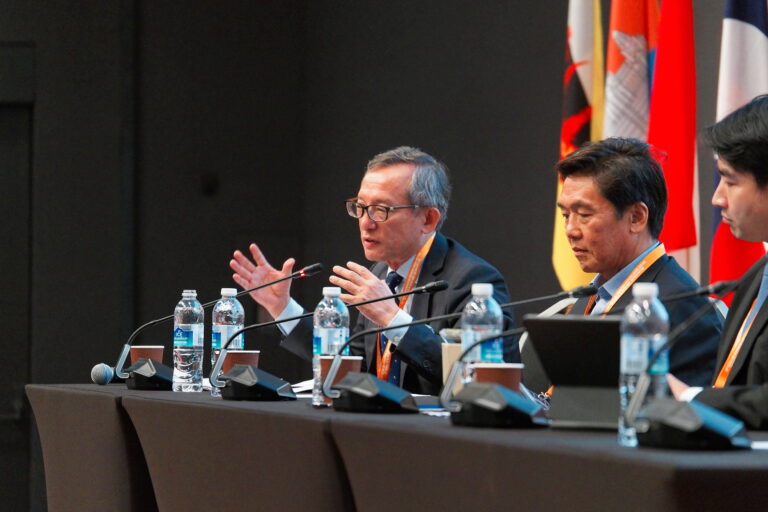
In conjunction with the 12th CACJ Meeting and 46th ASEAN Law Association Governing Council Meeting which took place on 13 to 15 November 2025, the CACJ and the ASEAN Law Association jointly commissioned two seminars which took place on the sidelines of the said meetings.
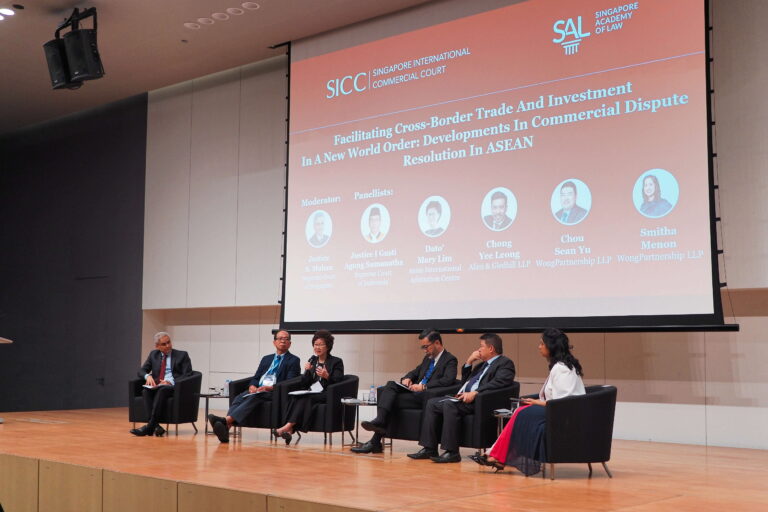
The first was a seminar titled “The Future of Cross-Border Insolvency and Dispute Resolution in ASEAN”, jointly organised by the Singapore International Commercial Court (SICC) and the Singapore Academy of Law (SAL). This took place on 13 November 2025 and featured two panel sessions.
The first panel session, titled Facilitating Cross-border Trade and Investment in a New World Order: Developments in Commercial Dispute Resolution in ASEAN covered the development of regional arbitration hubs, the proliferation of cross-jurisdictional collaborations and ASEAN’s approach to legal transplantation. The panellists also explored trends in enforcing arbitral awards in sectors like construction and environmental matters. The second panel session, titled Navigating Cross-border Insolvency in ASEAN: Challenges and Future Directions explored the harmonisation of the cross-border insolvency ecosystem in ASEAN, and recent key decisions involving cross-border elements.
The second was the Seminar on Transnational Practice of Law in ASEAN, held on 14 November 2025. Associate Professor Simon Tay delivered the keynote address, which highlighted the economic, political, and social forces driving ASEAN integration, and emphasised the need for legal systems to align. The panellists underscored the need for better legal infrastructure, collaboration, and education and discussed the importance of understanding the differences between the legal systems and subject matter frameworks, and the role that ASEAN judiciaries can play in facilitating greater understanding of various legal matters within the business community and fostering legal convergence where appropriate.